Drive through the most refined neighborhoods of Clermont, Groveland, or Winter Garden on any given Saturday evening and you'll notice something striking: beautifully designed backyards, almost all empty. Elegant pavers, well-kept landscaping, a grill under a covered lanai, and no one out there enjoying it. Florida offers more outdoor-friendly evenings than almost any state in the country, and yet many homeowners still retreat indoors.
At Renovation Outdoors, we've designed outdoor living spaces across Central Florida for more than a decade, and the we’ve noticed one key thing: a beautiful backyard isn't the same as a used backyard. The ones people genuinely gather in every week share a small set of design principles, and most cost no more than the ones that sit empty.
Here's what we've learned about designing outdoor spaces that earn their place in your life.
Start With How You Actually Live Outside
Before anyone talks about pavers, pergolas, or planting beds, the first question we ask a new client is: "What do you do outside right now, even if it's not perfect?" Morning coffee on the patio? Sunday dinner with the family? Grilling on game day? A spot for the dogs to run? A quiet reading nook away from the kids?
A space designed for the life you're actually living will get used and that is the main purpose of investing in your home, to make the most of it.
Create Distinct Outdoor Rooms in Your Florida Backyard
The single biggest design mistake in Florida backyards is one giant, undifferentiated patio. No boundaries, no function, no reason to stop in any one spot. The yards that get used break the outdoor area into rooms the way an interior designer breaks up a great room:
- Dining room: a table-and-chairs zone near the kitchen, often under cover
- Living room: a lounge area with sofas, a fire pit, or a TV wall
- Kitchen: grill station, prep counter, maybe a built-in
- Play area: lawn, pool, or hardscape open for kids, dogs, or games
- Getaway: a hammock, reading chair, or small garden seat tucked away
Not every yard needs all five. Most benefit from at least two or three. A proper paver patio design can define these rooms without walls by using changes in paver pattern, border color, or level.
Design Smooth Indoor-to-Outdoor Transitions
Spaces that don't get used often fail at the transition from indoors to out. The spaces people gravitate to are usually consistent and easy to get to.
Wider openings (French doors, stacking sliders), extended overhangs, and matching the patio's edge to a natural break line in the house all make the outdoors feel like more house, not like a separate project.
Solve for Florida's Real Enemies: Heat and Mosquitoes
The two biggest reasons people don't use their Florida backyards are mosquitoes and direct afternoon sun. If your design doesn't address both, the space goes unused by July.
- Shade: a pergola, shade sail, extended roof, or well-placed tree canopy turns "too hot" into "perfect."
- Airflow: avoid enclosing a space on all four sides. Florida outdoor rooms should breathe.
- Screens: screened lanais work beautifully; for open patios, an outdoor ceiling fan makes a huge difference.
- Lighting: a dark yard is an unused yard. Path lights, uplighting on trees, and a few string lights turn a blank patio into somewhere you want to linger.
Light Your Florida Backyard for After-Dark Use
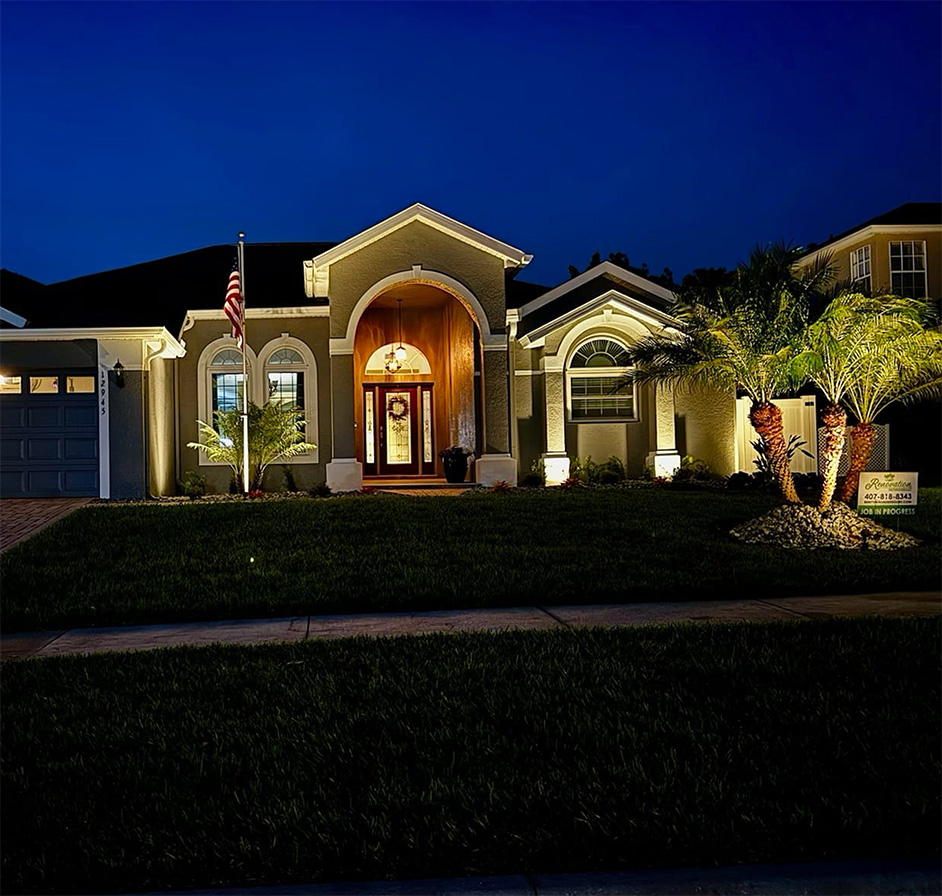
Florida's evenings are the best part of the day. And yet most yards are pitch black 90 minutes after sunset. Even a modest lighting design (a few path lights, uplights on two or three signature palms, and a wash on the back of the house) extends the usable hours of a backyard from 4 hours a day to 12. A lighting plan should be part of the initial landscape enhancement conversation and our team would love to help with that.
Nail the Details That Make a Backyard Memorable
The difference between "nice backyard" and "I could live out here" usually comes down to the finishing details:
- Clean, intentional edges between hardscape and softscape. Concrete landscape curbing is the single fastest way to add this polish.
- Matching materials: same paver family on the patio and pool deck, same mulch across every bed.
- Repetition of plantings rather than a random collection. Three of one species looks designed; one each of five species looks chaotic.
- A clear focal point in each "room," such as a fire feature, a water feature, a statement planter, or a signature tree.
Bring a Design Team in Early (Not Mid-Project)
Most underused backyards got that way because they were built in pieces by different trades over several years, each one doing a competent job in isolation while nobody stepped back to look at the whole property. The paver crew pours a patio. A year later, a plant nursery drops in a few beds. Later still, someone adds a pergola on top of what's already there. Each piece is fine on its own, but the final result feels disconnected because it was never designed as one.
The fix is having a single team thinking about the whole property from the beginning. That means understanding how the hardscape interacts with the plantings, how the lighting reveals the hardscape after dark, how the drainage protects the plantings during the rainy season, and how the irrigation is sized and zoned for the final plant palette, not just what exists today. When one team owns the whole design, the finished yard feels cohesive in a way you notice immediately, even if you can't quite name why.
A design-first approach also saves real money. Decisions that cost a few hundred dollars upfront, like choosing the right paver base for Florida soil, routing conduit under a patio for future lighting, or pre-installing a sleeve for a future water line, routinely prevent four-figure retrofits down the road. That's where a dedicated outdoor renovation team pays for itself: fewer change orders, fewer surprises, and a backyard that works on day one rather than after several phases of rework.
What should I include in an outdoor living space in Florida?
At minimum, a defined sitting and dining area on quality pavers or a covered patio, enough shade to be usable in summer, functional lighting for after sunset, and clean landscape edges. From there, optional additions are an outdoor kitchen, a fire feature, a water feature, or a covered structure.
How do I make my Florida backyard usable year-round?
Four things make the biggest difference: shade (pergola, overhang, or canopy trees), airflow (outdoor fan or cross-ventilation), lighting (so it works after sunset), and protection from mosquitoes (screens, landscape choices, and smart placement of water features).
Design a backyard you'll actually live in
Renovation Outdoors designs and builds outdoor living spaces across Clermont, Groveland, Winter Garden, and all of Central Florida. Request a free quote. We'll walk your property and help you map out a space your family will love.


.png)