Why Your Yard Still Floods
Standing water and soggy patches are common in Central Florida yards. See what causes them, and how French drains and proper grading solve the problem for good.
Articles >
Yard Drainage Solutions in Central Florida
Standing water and soggy patches are common in Central Florida yards. See what causes them, and how French drains and proper grading solve the problem for good.
Central Florida's sandy soil, flat lots, and heavy summer rain make a difficult combination for a lawn. Water that has nowhere to go sits on the surface, sometimes for days, turning parts of a yard soft, patchy, or unusable. Yard drainage solutions such as French drains and proper grading give that water a path away from the property, protecting the lawn, the landscaping, and the home itself. For homeowners across Lake County and the surrounding area, solving a drainage problem early is far simpler than repairing the damage it leaves behind.
Much of Central Florida sits on flat terrain with little natural slope, so rainwater has few places to drain on its own. Sandy soil drains quickly in some spots and barely at all in others, depending on how compacted it has become over the years. Add a summer rainy season that brings frequent, heavy downpours, and even a well-kept yard can end up with low spots that stay wet long after the rest of the property has dried out.
Older neighborhoods and newly graded lots are often the most affected, since original grading can shift or settle over time. A yard that drained fine when the home was built may no longer do so a decade later.
A few patterns tend to show up before a drainage issue becomes serious. Water pooling for more than a day after rain is the clearest signal, especially near the foundation, a patio, or a low corner of the yard. Grass that turns yellow or dies in the same spot every season, mulch that washes out of garden beds, and soil that stays soft or spongy underfoot are all worth paying attention to.
Mosquito activity is another indicator homeowners often notice before anything else, since standing water gives them a place to breed. Left alone, any of these signs tend to get worse rather than better, particularly as Florida's rainy season sets in each year.
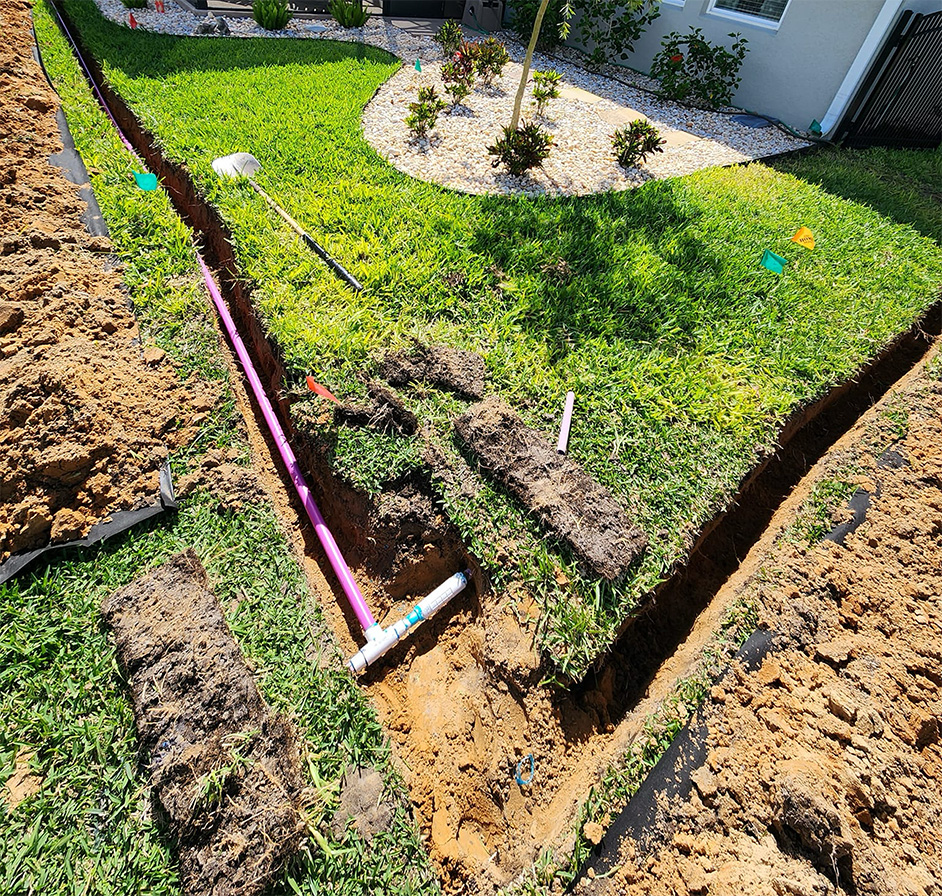
A French drain is a trench lined with gravel and a perforated pipe that collects water from the surrounding soil and carries it to a safer discharge point, away from the house or the problem area. Renovation Outdoors installs French drains as part of its irrigation and drainage services, designed to keep a garden flourishing by providing the right amount of water while preventing any excess from causing damage.
French drains work well for yards with a persistent wet spot, water collecting near the foundation, or low areas that never fully dry between storms. They are a targeted fix for a specific water problem, rather than a change to the whole yard's landscape design.
Not every yard needs a French drain. In some cases, simply re-grading the soil so it slopes away from the house resolves the issue by directing water where it should have gone in the first place. Extending downspouts further from the foundation, or adjusting where a patio or driveway sheds water, can also make a noticeable difference.
The right solution depends on the specific layout of the property, so it helps to have a professional look at how water is actually moving across the yard before deciding on a fix.
A proper assessment starts with observing how water behaves during and after rainfall: where it collects, how long it takes to drain, and what is nearby that could be affected, such as a foundation, a patio, or established landscaping. From there, a technician can recommend whether a French drain, a grading adjustment, or a combination of both will solve the problem, rather than guessing at a one-size-fits-all fix.
A French drain works by collecting excess groundwater through a perforated pipe buried in a gravel-lined trench, then carrying it away from the problem area to a point where it can drain safely. In Central Florida's sandy, flat terrain, this gives water a clear path it would not otherwise have, which is especially useful in low spots that hold water after summer storms.
Fixing a waterlogged yard usually starts with identifying why water is collecting in that spot, often a lack of slope, compacted soil, or a low point in the landscape. Depending on the cause, the fix may be a French drain, re-grading the affected area, or redirecting runoff from downspouts and hardscaping. A professional assessment is the most reliable way to match the right solution to the actual problem.
Standing water rarely fixes itself, and Central Florida's rainy season only makes a small problem more visible over time. Renovation Outdoors offers drainage assessments for homeowners across Central Florida who want to understand what is causing a wet yard and what it will take to correct it. Contact Renovation Outdoors to schedule an assessment.


.png)